
Abstract
Introduction: This study seeks to investigate the prescribed protocols for empiric antibiotic therapy in the paediatric department at the teaching Hospital Campus of Lomé. Methods: This was a descriptive cross-sectional study carried out from July to September 2022, including all children at the paediatric department of the teaching Hospital (C.H.U.) Campus of Lomé who had received empiric antibiotic therapy. A data collection form containing the following variables: sociodemographic data, date of admission and discharge from the department, probable site of infection, biological and imaging tests, antibiotics prescribed, and clinical progression was used. Results: A total of 817 children aged 0 to 16 had been admitted to paediatric department during the inclusion period, and 503 had received antibiotic therapy, with a majority of probabilistic prescriptions in 93.4% (470/503) of cases. On admission, 68.9% presented with fever, and respiratory infections (34.9%) were the most common. Bacteriological tests were performed in 21.9% of cases. As first-line antibiotics, β-lactams and aminoglycosides were prescribed in respectively 96.6% and 61.9% of cases, and as second-line antibiotics in 58.4% and 41.6%. The parenteral route was the most commonly used, at 96.6%. Conclusion: Probabilistic antibiotic therapy is widely practised in paediatrics due to the urgency of treating children. It is important to estimate its current prevalence in our hospitals and to review the most commonly used molecules for a more rational use of antibiotics.
Keywords
Antibiotics probabilistic prescribing paediatrics Togo.
Introduction
The discovery and widespread use of antibiotics was a major advance that revolutionised the history of medicine, improving the prognosis for bacterial infections [1]. Antibiotics are one of the most commonly prescribed classes of drugs in the world, and their global consumption increased by 65% between 2000 and 2015 [2]. In Togo, children under the age of 15 make up approximately 42% of the population, according to the latest general population census in 2022 [3]. Children are a vulnerable population for bacterial diseases due to the immaturity of their immune systems [4]. This fragility leads to life-threatening infections in children, creating an absolute emergency that requires rapid and adequate treatment. Any appropriate antibiotic therapy should be based on bacteriological results. However, in many low-resource settings, including ours, the prescription of probabilistic (empiric) antibiotic therapy remains a common practice, particularly in emergency paediatric care. This trend is largely driven by multiple systemic barriers, including the limited accessibility of bacteriological testing both in terms of geographic reach and financial affordability. Even when diagnostic services are available, significant delays in obtaining culture and sensitivity results often render them impractical for timely decision-making. Furthermore, the lack of comprehensive universal health coverage exacerbates these challenges, making it difficult for many patients to access appropriate diagnostics. Consequently, clinicians are frequently compelled to initiate empiric antibiotic treatment based on clinical judgment rather than microbiological evidence [5]. This consists of prescribing antibiotics before the microorganism responsible for the infection has been identified and its sensitivity to antibiotics has been studied [6]. Under these conditions, antibiotic prescriptions may be rational or irrational, leading to use that is not always appropriate.
The inappropriate use of antibiotics whether through unnecessary prescriptions, incorrect dosing, or prolonged treatment durations not only leads to immediate adverse effects in patients but also plays a significant role in the development and spread of antibiotic-resistant bacterial strains. Over time, this selective pressure has contributed to a global rise in antimicrobial resistance (AMR), compromising the effectiveness of commonly used antibiotics and posing a serious threat to public health. Several studies conducted in Togo have documented the emergence and increasing prevalence of antibiotic resistance patterns among clinical bacterial isolates. These findings highlight a concerning trend of reduced susceptibility to commonly prescribed antibiotics, reflecting both the local impact of antimicrobial misuse and the broader challenge of antimicrobial resistance (AMR) in low-resource settings. For instance, a study conducted in 2021 on the rising trend of antibiotic resistance among Enterobacteriaceae in Togo revealed a significant increase in resistance rates of Escherichia coli isolates over seven years (2010–2017). During this timeframe, resistance to third-generation cephalosporins specifically ceftazidime and ceftriaxone rose markedly from 18.7% to 39.3%. Similarly, resistance to ciprofloxacin escalated from 1.7% to 40.2% [7]. These alarming trends underscore the growing challenge of treating common bacterial infections and the urgent need for strengthened antimicrobial stewardship and surveillance programs to avoid therapeutic deadlocks [8]. In response to the escalating global threat posed by antimicrobial resistance (AMR), the World Health Assembly adopted a Global Action Plan in May 2015 aimed at guiding coordinated efforts to combat AMR across sectors and nations [8]. In alignment with this international initiative, Togo has developed its own National Action Plan to address AMR [9], reflecting a growing commitment to strengthening antimicrobial stewardship, surveillance, infection prevention, and public awareness at the national level [9].
As a result, the rational use of antibiotics has become a crucial part of controlling the emergence of multi-resistant strains, which requires controlling current prescribing practices and proposing new treatment protocols.
Despite the increasing body of literature on antimicrobial resistance (AMR) and the use of empiric antibiotic therapy in our context, there remains a significant gap in knowledge regarding prescribing practices in paediatric care. Hence, the present study aims to investigate the patterns and determinants of empiric (probabilistic) antibiotic prescribing in paediatric care in Togo, using the Campus University Hospital Centre (CHU-Campus) of Lomé as a representative case study.
Materials and Methods
Study design
This was a descriptive cross-sectional study of the medical records of patients hospitalised between January and June 2022. The study was conducted from 11 July to 28 September 2022 in the paediatric department of the University Hospital Centre of the Lomé Campus (Togo), which is the second tertiary referral centre in Togo's healthcare system.
The study included the records of patients hospitalised in the paediatric department of the University Hospital Centre who had received probabilistic antibiotic therapy. Incomplete records, records of patients whose causative organism was known or who had undergone an antibiogram, or who were non-compliant with treatment, were not included in the final statistics.
Data collection and statistical analysis
Data were extracted from medical records using a data collection form containing the following variables: sociodemographic data, date of admission and discharge from the department, probable site of infection, biological and imaging tests, antibiotics prescribed, and clinical progression.
Data entry was performed using Epi Info software version 7.2.5.0. Data processing and statistical analysis were performed using Microsoft Excel 2016 software. Descriptive statistics were used to summarize the data: qualitative variables were expressed as frequencies and proportions, while quantitative variables were presented as means with standard deviations.. Associations between categorical variables were assessed using the Chi-square test or Fisher’s exact test, as appropriate. A p-value of less than 0.05 was considered statistically significant.
Results
A total of 817 children aged 0 to 16 years were admitted to the paediatric ward during the study period. Five hundred and three (503) received antibiotic therapy, representing 61.5% of the total, with the majority of prescriptions (93.4%, n = 470) being probabilistic. Based on the inclusion criteria, 470 were included in the present study (Figure1).
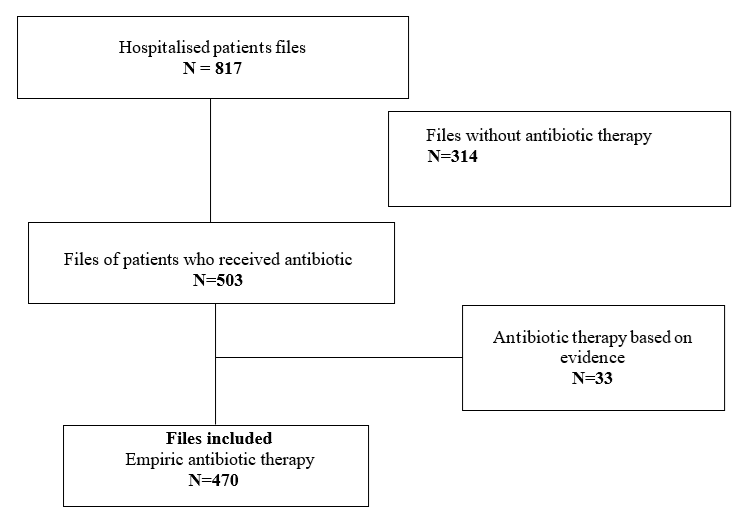
Figure 1: Flow chart for the inclusion of children hospitalised in paediatrics at the CHU campus in Lomé from 11 July to 28 September 2022.
Socio-demographic characteristics
Males were the most represented (56.2%) with a sex ratio (M/F) of 1.28. The majority of children (60.2%) had been referred from another centre for better care. Approximately 37.4% of the subjects included were infants, and 27.4% were newborns (Table 1).
| Number (N=470) | Proportions% | |
| Gender | ||
| Male | 264 | 56.2 |
| Female | 206 | 43.8 |
| Age | ||
| [0-28] days | 129 | 27.4 |
| [1-24] months | 176 | 37.4 |
| [2-5] years | 93 | 19.8 |
| [5-11] years | 58 | 12.4 |
| [11-17[years | 14 | 3.0 |
| Type of admission | ||
| Consultation | 178 | 37.9 |
| Transfer from a department | 9 | 1.9 |
| Referal | 283 | 60.2 |
| Temperature on admission | ||
| > 37,5 | 324 | 68.9 |
| 36 - 37,5 | 131 | 27.9 |
| Not specified | 9 | 1.9 |
| < 36 | 6 | 1.3 |
Clinical pattern of the study cohort
On admission, the average temperature of the children was 38.16 ± 1.09°C, with extremes of 34°C and 40.5°C, 68.9% of them had a fever (Table 1). The length of hospitalisation was 5.28 ± 3.95 days, with extremes of 0 days and 32 days. Patients who stayed less than 5 days were the most numerous, accounting for 64.3%. Respiratory infections (57.5%) were the most common diagnosis, and some children had multiple infectious foci at the same time (Table 2). At least one biological test was performed in 98.7% of patients, and more specifically, bacteriological tests were performed in 21.9% of cases.
| Number (N) | Proportions (%) | |
| Pulmonary | 102 | 34.9 |
| ENT* | 66 | 22.6 |
| Skin/Tissue | 52 | 17.8 |
| Oro-digestive | 35 | 12.0 |
| Urogenital | 21 | 7.2 |
| Meninge | 18 | 6.2 |
| Hepatic | 11 | 3.8 |
| Blood | 9 | 3.1 |
| Osteoarticular | 7 | 2.4 |
| Endocarditis | 1 | 0.3 |
*ENT:ear, nose and throat
Type of antibiotic therapy and antibiotics used
Combination antibiotic therapy (dual therapy, 58.1%) was more common than single antibiotic therapy (33.4%). β-lactams and aminoglycosides were the most commonly prescribed families in 96.6% and 61.9% of cases as first-line treatment, with the majority of prescriptions being for gentamicin (60.0%), ceftriaxone (42.8%) and cefotaxime (27.0%) (Table 3). The parenteral route was the most commonly used, at 96.6%. Seventy-seven patients, or 16.4%, had their treatment adjusted, mainly due to a lack of improvement in their clinical condition (61.0%) and abnormal additional test results (27.3%). During readjustments, β-lactams and aminoglycosides remained the most commonly prescribed families, in 58.4% and 41.6% of cases, respectively. Of the seventy-seven (77) patients who received a second course of antibiotic therapy, two received a third course, or 2.6%. vancomycin was the only molecule prescribed in both cases.
| Number (N) | Proportions (%) | |
| Antibiotic family | ||
| β-lactams | 454 | 96.6 |
| Aminoglycosides | 291 | 61.9 |
| Nitroimidazoles | 36 | 7.7 |
| Fluoroquinolones | 2 | 0.4 |
| Anti-folates | 2 | 0.4 |
| Glycopeptides | 1 | 0.2 |
| Others* | 12 | 2.5 |
| Antibiotic molecules | ||
| Gentamicin | 282 | 60.0 |
| Ceftriaxone | 201 | 42.8 |
| Cefotaxime | 127 | 27.0 |
| Amoxicillin-Clavulanic acid | 103 | 21.9 |
| Metronidazole-Diloxanide | 32 | 6.8 |
| Ampicillin | 15 | 3.2 |
| Framycetin | 12 | 2.6 |
| Tobramycin | 11 | 2.3 |
| Fusidic acid | 9 | 1.9 |
| Oxacillin | 6 | 1.3 |
| Rifamycin | 3 | 0.6 |
| Metronidazole | 3 | 0.6 |
| Cotrimoxazole | 2 | 0.4 |
| Azithromycin | 2 | 0.4 |
| Others** | 5 | 1 |
*Fusidic acid (9) Rifamycin (3) **Ceftriaxone-Sulbactam (1), Ciprofloxacin (1), Josamycin (1), Ofloxacin (1), Vancomycin (1)
Age groups, sites of infection and molecules prescribed as first-line treatment
The prescription of gentamicin was significantly associated with the 1-24 month age group in 114 cases (p=0.006). There was also a significant link between the prescription of cefotaxime and the 0-28 day age group (newborns) (p=0.0014) (Table 4). Results revealed a significant association between the prescription of amoxicillin-clavulanic acid and pulmonary infections (p=0.0026) and ear, nose and throat (ENT) infections (p=0.0035).
Overall, the outcome was favourable in 81.5% of patients. The mortality rate was 7.9%. The discharge rate was around 7.4% with 1.9% of patients leaving without being discharged.
| [0-28] days | [1-24] months | [2-5] years | [5-11] years | [11-17] years | Total | p-value | |
| n(%) | n(%) | n(%) | n(%) | n(%) | n(%) | ||
| Gentamicin | 70(24.8) | 114(40.4) | 61(21.6) | 30(10.6) | 7(2.5) | 282(100) | 0.006 |
| Ceftriaxone | 1(0.5) | 103(51.2) | 61(30.3) | 29(14.4) | 7(3.5) | 201(100) | 0.899 |
| Cefotaxime | 124(97.6) | 3(2.4) | 0(0) | 0(0) | 0(0) | 127(100) | 0.0014 |
| Amoxicillin-Clavulanic acid | 4(3.9) | 50(48.5) | 23(22.3) | 21(20.4) | 5(4.9) | 103(100) | 0.149 |
| Metronidazole-Diloxanide | 0(0) | 16(50) | 9(28.1) | 6(18.8) | 1(3.1) | 32(100) | 0.447 |
| Ampicillin | 10(66.7) | 3(20) | 2(13.3) | 0(0) | 0(0) | 15(100) | - |
| Framycetin | 6(50) | 5(41.7) | 0(0) | 1(8.3) | 0(0) | 12(100) | - |
| Tobramycin | 0(0) | 8(72.7) | 3(27.3) | 0(0) | 0(0) | 11(100) | - |
Discussion
This study aims to investigate the patterns and determinants of empiric (probabilistic) antibiotic prescribing in paediatric care of Campus University Hospital Centre (CHU-Campus) of Lomé, Togo. From January to June 2022, 817 children were admitted to the paediatric ward. A total of 503 received antibiotic therapy, the majority of which was probabilistic (93.4%). β-lactams and aminoglycosides were the most commonly prescribed families, at 96.6% and 61.9% as first-line treatment, with the majority of prescriptions being for gentamicin (60.0%), ceftriaxone (42.8%) and cefotaxime (27.0%). The outcome was favourable in 81.5% of patients.
We found that approximately two-thirds of patients seen during the study period were prescribed antibiotic therapy, with 93.4% of cases being probabilistic. Antibiotics remain one of the most commonly prescribed therapeutic classes worldwide [2]. Our data are similar to those of Yadav et al. in Nepal, who reported a 93.4% prescription rate for antibiotics [10]. In Togo in 2013, Tchepan et al reported a 96.4% prescription rate for probabilistic antibiotic therapy in adults hospitalised in his study conducted at the Sylvanus Olympio University Hospital in Lomé [11]. This high rate of antibiotic prescription is reported in other African countries, notably in Guinea Conakry by Diallo et al.,[12] who reported an antibiotic prescription rate of 72.08% among children aged 0 to 14 years admitted to the paediatric ward. In Mali, Diamoutene et al. observed a prescription rate of 97.3% [13]. In our region, where resources are limited and given the emergencies related to the vulnerability of the paediatric population to infections, doctors are very often forced to prescribe antibiotics, even in the absence of bacteriological data. This high rate of probabilistic antibiotic prescription also reflects the difficulty of making an aetiological diagnosis of fever in our context.
This prevalence is slightly lower (65.2%) in countries such as China, where the economy is booming, but remains higher than in developed countries, according to the study by Wang et al for tertiary hospital data, but it should be noted that the prevalence found for secondary hospitals is closer to our prevalence (86.0%) [14]. This reinforces our hypothesis that the lack of diagnostic resources is a cause of overuse of antibiotics. In countries with more advanced technical facilities, the proportion of patients receiving probabilistic antibiotic therapy is lower. This is the case in a study conducted in the emergency department of the Mercy Regional Hospital Centre, which reported only 12% of patients receiving. This could be explained by the fact that this study was conducted in adults and also by the fact that in developed countries, access to bacteriological tests is easier [15].
Infants and newborns accounted for more than half of our study population, i.e. 64.8%. Males were the most represented, with a sex ratio of 1.28. This age group and male predominance were also reported by Barry et al.,[16] Similar studies conducted in Nigeria and Ethiopia reported that children under 5 years of age represented the largest part of their population [17,18]. This could be explained by the high number of consultations for this age group.
The most common reason for consultation was referral (60.2%), which is probably due to the fact that our study centre is located at the tertiary level of our country's healthcare pyramid. As a result, it serves as a referral centre for other centres.
Antibiotic prescriptions were very high in the under-5 age group (84.6%). Diallo et al. reported rates of 72.1% in children aged 0 to 4 years [12]. This high rate in this age group could be explained by the immaturity of their immune system compared to older children who have already undergone antigenic stimulation by germs (viruses or bacteria) [4]. Indeed, the literature reports that in young children, there is a physiological deficit in humoral immunity, which explains the frequency of infections in this age group. This deficiency is linked to a combination of a gradual loss of immune protection by maternal antibodies from the 3rd to 6th month of life and the immaturity of the child's own humoral immune system [19].
Upon admission, 68.9% of children had a fever, which, although not specific, is an alarming sign of infection or a more serious health problem. As found in the literature, fever is the most common symptom leading to hospital consultation [20]. These fevers may or may not be infectious in origin. In our context, where additional tests to determine the aetiological diagnosis of fevers cannot be performed in an emergency, all fevers are treated as infectious until proven otherwise.
More than half of the infections were respiratory. Other studies conducted in Nigeria, India and a multicentre study in China reported respiratory infections as the main causes of antibiotic use in paediatric settings [17,21,22]. In fact, in 2020, the WHO stated that acute respiratory infections were one of the most common causes of consultation and hospitalisation in healthcare centres, particularly in paediatric departments [23]. In addition, respiratory symptoms in children are alarming signs that often alert parents more quickly, leading to a consultation.
β-lactams and aminoglycosides were the most commonly prescribed families of antibiotics. These results could be explained, on the one hand, by the broad spectrum of action and good tolerance of β-lactams in children and, on the other hand, by their accessibility and availability to parents and their greater familiarity to prescribers [24]. Furthermore, as respiratory infections were predominant in this study, β-lactams alone or in combination with an aminoglycoside are the most appropriate antibiotics [25]. In most recommendations, cephalosporins, particularly ceftriaxone, are recommended for the treatment of respiratory infections in children [26,27]. There is a high rate of gentamicin prescription, which may be linked to local prescribing habits. However, this high rate of gentamicin prescription is a cause for concern given the risks of ototoxicity and renal toxicity [28]. The parenteral route was by far the most widely used, as found in other studies conducted in hospitals [10,17]. The use of the parenteral route is justified by the fact that the study was conducted in a facility at the top of the healthcare pyramid for referred children, who require treatment that allows for rapid clinical progress.
A favourable outcome was observed in 81.5% of patients, compared with 7.9% of deaths. This satisfactory clinical cure rate could reflect good management in both diagnosis and choice of antibiotics. In 2019, Diallo et al.,[12] reported a favourable outcome in 99.23% of cases. However, it cannot be ruled out that these antibiotics were used incorrectly and that the patients were not suffering from conditions such as viral infections or other pathologies that did not require antibiotic therapy, which would have resulted in a favourable outcome even without antibiotic therapy. This non-probabilistic use of antibiotics constitutes a selection pressure leading to the emergence of multi-resistant strains. This practice should be better regulated by assessing local epidemiology in order to harmonise the prescription of antibiotics in a probabilistic manner through national protocols. The high rate of discharge and evasion may also reflect the cost of care, which is unaffordable for some patients, as well as a poor or unfavourable outcome.
The strength of our study lies in the fact that it is the first study on the use of antibiotic therapy in paediatric settings in Togo.
During this study, we did not document the previous antibiotic treatments received by the respondents prior to their admission. As the methodology used was to collect data from medical records, the major constraint encountered in the analysis of the data was the incompleteness of the information.
The relatively short duration of the study and the fact that it was conducted in a single centre mean that these data cannot be generalised to the entire population.
Further studies analysing antibiotic therapies should be initiated, taking into account the relevance of antibiotic therapy and its compliance with clinical and paraclinical diagnoses. This would enable us to assess compliance with recommendations and rules for the proper use of antibiotics in our hospitals.
Conclusions
The paediatric population, characterised by an immature immune system, is particularly susceptible to bacterial infections, which often take a severe course in the absence of early and appropriate antibiotic treatment. Although not recommended, the probabilistic prescription of antibiotics remains a strictly medical practice used by doctors in our context, where bacteriological tests are very difficult to access. These antibiotics are prescribed with the aim of resolving emergency situations in patients. However, as not all fevers are of bacterial origin, bacteriological tests or procalcitonin assays must be performed to demonstrate the relevance of antibiotics and avoid misuse.
Declarations
Ethics approval and consent to participate
This study received approval from the management of CHU Campus and the paediatrics department. Data confidentiality and patient anonymity were respected throughout the study.
Conflicts of Interest
The authors declares that there is no conflict of interest regarding the publication of this paper.
Funding Statement
None
Authors' contributions
This work was carried out in collaboration with all authors. ZSA, FAL, MS designed the study and wrote the protocol. FAL and ZSA wrote the first version of the manuscript. YRK, EK, HEK, KE proofread. All authors read and approved the final manuscript.
Acknowledgments
Sincere thanks to all the staff of the pediatrics for the hard work. A special thank to the children who participated in this study and to their parents.
Section
References
- Levy SB. Le paradoxe des antibiotiques: Comment le miracle tue le miracle. Regards sur la Science, coll. Paris (France): Belin; 1999. 239 p. DOI ↗ Google Scholar ↗
- Mohsin C. La surconsommation d’antibiotiques menace la santé mondiale. France-info. 2018. Disponible sur: DOI ↗ Google Scholar ↗
- Togo Officiel. Démographie, habitat, conditions de vie au Togo, des progrès enregistrés ces dernières années. Site officiel du Togo, République Togolaise. 2024. Disponible sur: DOI ↗ Google Scholar ↗
- Durandy A. Développement du système immunitaire spécifique chez le fœtus et le nouveau-né. Rev Fr Allergol Immunol Clin. 1 janv 2000; 40(1):65‑9. Disponible sur: DOI ↗ Google Scholar ↗
- Organisme Mondiale de la Santé, Comité National de Promotion de la Protection Sociale, Union Européenne. Système de financement de la santé au Togo Revue et analyse du système. 2015. Disponible sur: DOI ↗ Google Scholar ↗
- Ragonnet B, Brun C, Textoris J, Leone M. Antibiothérapie des états septiques graves. 13e éd. MAPAR; 2013. 705 p. DOI ↗ Google Scholar ↗
- Salah FD, Sadji AY, Akolly K, Bidjada B, Awoussi KS, Abaya AM, et al. Augmentation de la résistance aux antibiotiques des Entérobactéries isolées à l’Institut National d’Hygiène de Lomé de 2010 à 2017. J Interv Epidemiol Public Health. 13 août 2021;4(3):1089. Disponible sur: DOI ↗ Google Scholar ↗
- Organisation mondiale de la Santé. Plan d’action mondial pour combattre la résistance aux antimicrobiens [Internet]. Genève: Organisation mondiale de la Santé; 2016 21 p. Disponible sur: DOI ↗ Google Scholar ↗
- Comité d’experts sur la résistance aux antibiotiques, OMS Togo. Plan d’action national de lutte contre la résistance aux antimicrobiens au Togo 2019-2023Togo-nap-amr-2019-2023.pdf . 2018 Disponible sur: DOI ↗ Google Scholar ↗
- Yadav CK, Bishunke R, Shrivastava AK, Palikhey A, Chaurasia L. Antibiotic Prescribing Pattern in Paediatric Emergency Department at Tertiary Care Teaching Hospital in Nepal. Janaki Med Coll J Med Sci. 26 avr 2022;10(1):24‑32. Disponible sur: DOI ↗ Google Scholar ↗
- Tchepan A. Prescription des antibiotiques chez les patients adultes hospitalisés dans cinq services au CHU Sylvanus Olympio de Lomé en 2011 : Etude rétrospective de 957 dossiers [Thèse]. Lomé, [Thèse en médecine]. [Lomé, Togo,]: Université de Lomé; 2013. DOI ↗ Google Scholar ↗
- Diallo ML, Barry IK, Camara E, Diallo SB, Bangoura K, Ondima LHM, et al. Prescription des antibiotiques chez les enfants de 0 à14 ans au service de pédiatrie du Centre Medical Communal (CMC) de Ratoma. Journal de la Recherche Scientifique de l’Université de Lomé. 2019;21(3):343‑8. Disponible sur: DOI ↗ Google Scholar ↗
- Diamoutene O, Coulibaly O, Traoré M, Kone AK, Maiga B, Kanté M, et al. Évaluation de la Prescription Rationnelle des Antibiotiques dans un Service de Pédiatrie de Bamako. Health Sci Dis. 2024;25(7):60‑4. Disponible sur: www.hsd-fmsb.org DOI ↗ Google Scholar ↗
- Wang C ning, Tong J, Yi B, Huttner BD, Cheng Y, Li S, et al. Antibiotic Use Among Hospitalized Children and Neonates in China: Results From Quarterly Point Prevalence Surveys in 2019. Front Pharmacol. 29 mars 2021;12:601561. Disponible sur: DOI ↗ Google Scholar ↗
- Assel A. Évaluation de la qualité des prescriptions d’antibiothérapie probabiliste curative au Service d’Accueil des Urgences du CHR de Mercy [Thèse de médecine]. [Nancy France]: Université de Lorraine; 2016. Disponible sur: DOI ↗ Google Scholar ↗
- BARRY Mamadou Ciré, SIDIBE Sidikiba, DIALLO Mohamed Lamine, Saliou Bella, DIALLO Fatoumata Binta, Moustapha DM, et al. Prescription des Antibiotiques dans le service de pédiatrique de l’Hôpital National Ignace Deen à Conakry (Guinée) / Prescription of antibiotics in the pediatric department of the Ignace Deen National Hospital in Conakry (Guinea). Rev Int Sci Med Abidj. 2020;22(3):220-226. DOI ↗ Google Scholar ↗
- Aminu U, Ishaq A, Rummana S, BakiBillah AH. Prescribing Patterns of Antibiotics Among The Pediatric Patients Attended The Outpatient Departments of The Tertiary Level Hospitals in Nigeria: A Cross-Sectional Study. Health Nexus. 1 avr 2023;1(2):51‑7. Disponible sur: DOI ↗ Google Scholar ↗
- Yehualaw A, Taferre C, Bantie AT, Demsie DG. Appropriateness and Pattern of Antibiotic Prescription in Pediatric Patients at Adigart General Hospital, Tigray, Ethiopia. BioMed Res Int. 10 avr 2021;2021:6640892. Disponible sur: DOI ↗ Google Scholar ↗
- Couloigner V, Van Den Abbeele T. Rhinopharyngites de l’enfant. EMC - Oto-Rhino-Laryngol. 1 mai 2004;1(2):93‑112. Disponible sur: DOI ↗ Google Scholar ↗
- Posfay-Barbe K, Hofer M. La fièvre à travers les âges chez l’enfant. Rev Médicale Suisse. 2018;14(594):358‑61. Disponible sur: DOI ↗ Google Scholar ↗
- Mathew R, Sayyed H, Behera S, Maleki K, Pawar S. Evaluation of antibiotic prescribing pattern in pediatrics in a tertiary care hospital. Avicenna J Med. 5 janv 2021;11(1):15‑9. Disponible sur: DOI: DOI ↗ Google Scholar ↗
- Gong Y, Li H, Yang H, Tan K, Liu W, Li X, et al. Evaluation of the Quality of Antibiotic Prescribing in Primary Care: A Multicenter Longitudinal Study From Shenzhen, China. Front Pharmacol. 19 févr 2021;11:617260. Disponible sur: DOI ↗ Google Scholar ↗
- Organisation mondiale de la Santé. Centre de traitement des infections respiratoires aiguës sévères : manuel pratique pour la mise en place et la gestion d’un centre de traitement des IRAS et d’une unité de dépistage des IRAS dans les établissements de soins. 2020. Disponible sur: DOI ↗ Google Scholar ↗
- Masson E. Bêtalactamines. EM-Consulte. Disponible sur: DOI ↗ Google Scholar ↗
- Aubry, P., Infections respiratoires aiguës. Actualités 2022. Centre René La busquière, Institut de Médicine Tropicale, Université de Bordeaux, 33076 Bordeaux (France) Disponible sur: www.medecinetropicale.com. DOI ↗ Google Scholar ↗
- Bradley JS, Byington CL, Shah SS, Alverson B, Carter ER, Harrison C, et al. The management of community-acquired pneumonia in infants and children older than 3 months of age: clinical practice guidelines by the Pediatric Infectious Diseases Society and the Infectious Diseases Society of America. Clin Infect Dis Off Publ Infect Dis Soc Am. oct 2011;53(7):e25-76. Disponible sur: DOI ↗ Google Scholar ↗
- Harris M, Clark J, Coote N, Fletcher P, Harnden A, McKean M, et al. British Thoracic Society guidelines for the management of community acquired pneumonia in children: update 2011. Thorax. 1 oct 2011;66(Suppl 2):ii1‑23. Disponible sur: DOI ↗ Google Scholar ↗
- Gentamicine : substance active à effet thérapeutique. VIDAL. Disponible sur: DOI ↗ Google Scholar ↗